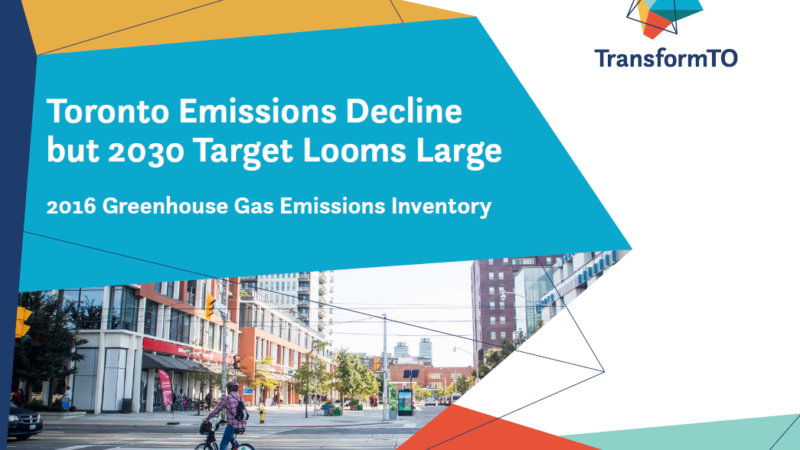
Exciting news: Toronto’s carbon emissions are declining. What does it mean?2/2019 - Toronto’s greenhouse gas (GHG) inventory shows how Toronto measures up compared to its goal of reducing carbon emissions 80% by 2050. Learn more about these significant results and emerging trends from the inventory and how the TransformTO plan is working to address the challenges in TAF’s summary report here.
Cities can’t lead from behind: TAF reviews Ontario climate plan12/2018 - Unfortunately, Ontario’s proposed climate plan, Preserving and Protecting our Environment for Future Generations: A Made-in-Ontario Environment Plan, could weaken cities’ potential to contribute to climate protection in three ways.
The Urban Anthropocene: An AGO Podcast with TAF CEO Julia Langer12/2018 - In the AGO's new "Into the Anthropocene" podcast, our CEO Julia Langer talks about about the role of cities in the fight against climate change and what "cityzens" can do to help.
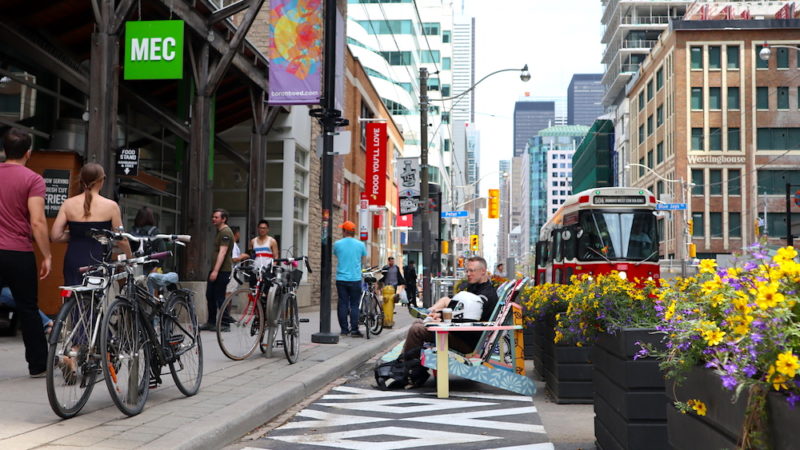
Beyond the commute: Three ways that the King Street Pilot creates more liveable communities11/2018 - Data shows an 11% increase in public transit ridership in the downtown core; this increase in ridership indicates that the pilot is working for commuters. But is it working for the rest of the community? Here are the top three ways the King Street Pilot contributes to a more livable downtown.
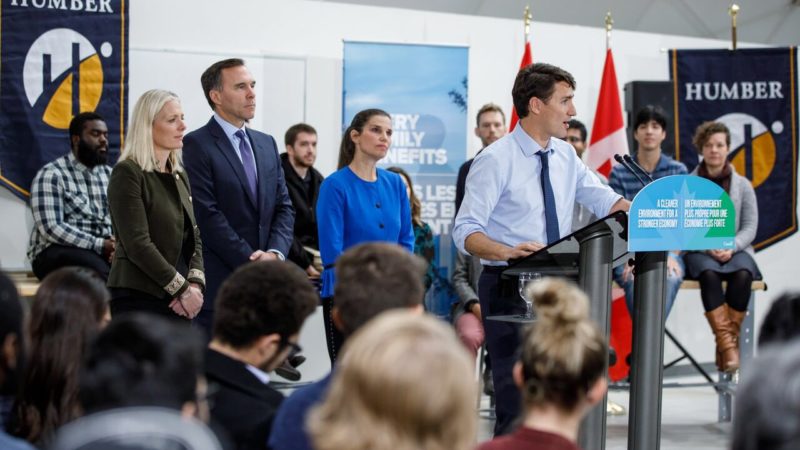
Lowdown on the New Federal Carbon Pricing System10/2018 - How will the federal price on pollution impact Ontario? Here's our lowdown on the latest climate policy announcement.
Toronto-based XPRIZE Finalist shows how to turn carbon emissions into renewable fuel8/2018 - What if, in addition to reducing emissions, we could also take carbon out of the atmosphere? One Toronto-based research team, Carbon Electrocatalytic Recycling Toronto (CERT), hopes to achieve just that – turning carbon dioxide into a renewable fuel. So we sat down to interview CERT's Director Phil De Luna.
Peel Region launches Off-Peak Delivery Pilot7/2018 - TAF, alongside with Metrolinx, will invest in an off-peak delivery pilot in Peel Region that's designed to alleviate congestion, improve business operations, and reduce carbon emissions. Major retailers such as Loblaw will participate in this Peel Region-led project.
The U.S. is leaving the Paris Agreement, Canada’s not. Why follow on weakening car emissions standards?5/2018 - Allowing our vehicle emission standards to roll back would harm our climate, our health, and our economy. In this op-ed originally published in The Hill Times, TAF CEO Julia Langer encourages Canada to stand its ground and continue to pave the way for clean transportation, despite U.S. policy decisions.
Five myths about ethanol and renewable fuels5/2018 - As Ontario's transportation emissions continue to rise, increased use of ethanol and other renewable fuels can be an important step in the transition to a low-carbon transportation system. Read our myth-busting blog to clear up common misconceptions and find out about some key environmental benefits of ethanol.
Mobility as a service: The value proposition for the public and our urban systems5/2018 - The future of urban transportation: Mobility as a Service can offer major benefits for cities, including reducing congestion and improving the economics and flexibility of—and accessibility to—existing transit services. Learn more about the potential impacts of Mobility as a Service in the GTHA in our guest blog by MaRS.
Collective impact: Improving public transit in Hamilton4/2018 - Improved and expanded public transit is a clear solution for a more sustainable, equitable, and healthy city. Environment Hamilton wants to encourage modal shift to reduce transportation-related emissions – but Hamilton's public transportation system must first be safe, accessible, affordable, and reliable. Learn more about Hamilton transit in this guest blog by Ian Borsuk.
All aboard the community benefits bus4/2018 - Local jobs and better public spaces: Check out what we learned from the Finch West LRT bus tour organized by the Toronto Community Benefits Network. Through collaboration with community groups, we will continue to explore how Community Benefits Agreements might be used to leverage public funding of climate solutions – like building retrofits – for multiple benefits.