
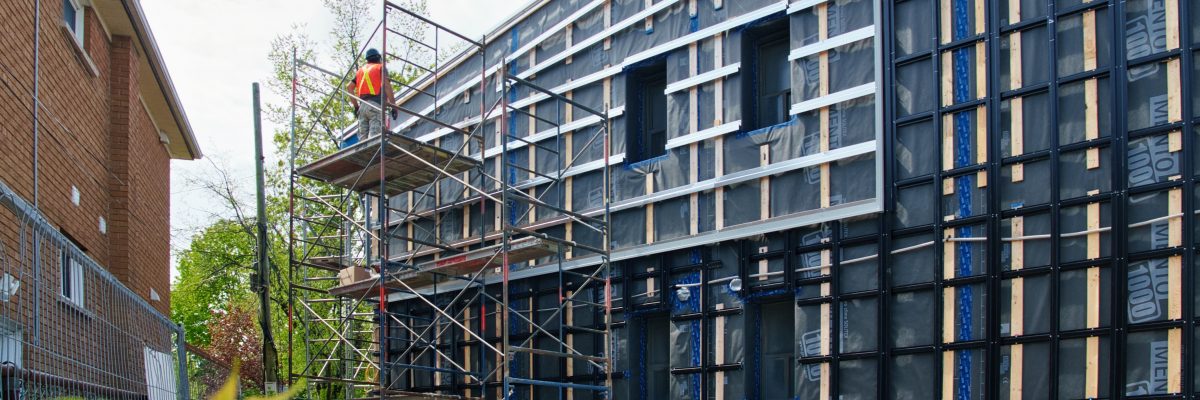
We know how to retrofit buildings. From high-efficiency heat pumps to smart controls to building envelope solutions, we have all the technologies we need. The main reason retrofits are not happening faster and at scale, despite all we know about how to approach them and the many benefits, is the multifaceted planning and multi-stakeholder decision-making required, including the financing strategy and project partnerships to make it all come together.
Recognizing this, the federal government launched the Deep Retrofit Accelerator Initiative (DRAI) in 2022. Its premise was simple: if the main barrier to scaling retrofits is coordination and complexity, then we need organizations whose discrete purpose is to reduce friction, create clarity, build capacity, modernize the industry and help move projects forward.
Since the start of 2023, across the country, 13 Retrofit Accelerators have been doing exactly that, including TAF, through our Retrofit Accelerator for multi-unit residential buildings in the GTHA.
In three short years (two for some groups) Canada’s Retrofit Accelerator Network has already activated hundreds of efficiency and electrification projects in buildings across every province and territory. We’ve fostered relationships with almost two thousand building owners, representing over 26 million square feet, and have a funnel of future projects currently valued at over $2 billion. As the Accelerators do their work, those critical questions of financing and delivery will be resolved, and more of these projects will translate into investments, jobs, energy security, more comfortable homes and day-to-day affordability improvements.
At TAF, the Deep Retrofit Accelerator Initiative immediately increased our GTHA-wide building retrofit practice. DRAI funding supports planning and operational expertise and enabled us to get proactive with building owners. Our team grew from four to 12 and we’ve built a local supply network and valuable service mix that keeps expanding. Today we’re working in over a hundred buildings across the GTHA, helping to deploy over $110 million to improve and upgrade almost 5,000 housing units, and deliver significant emissions reductions, comfort and affordability benefits.
The risk of stopping now
Since DRAI’s launch, the $200 million invested is projected to yield over $320 million in economic activity, not to mention the $2 billion in future work identified. But the Deep Retrofit Accelerator Initiative is set to expire in April 2027. Just as Canada is scaling up electrification, investing in housing and infrastructure, and navigating global economic and trade pressures, DRAI has built the capacity to directly address one of the hardest parts: on-the-ground implementation.
DRAI is effective because it has created the national scope critical for businesses who want to supply and service the retrofit market, with highly localized supports for building owners to plan and undertake their projects. Every completed project contributes to the industry capacity and modernization needed to deliver future projects more quickly and affordably. If the program ends now, not only will momentum be lost and projects stalled, it will put a major chill on an industry and relationships that are just starting to take off.
The right tool, at the right time
Ending federal support for retrofit acceleration now would be to remove a highly cost-effective mechanism that is actively translating policy and investments into day-to-day benefits for Canadians and industry.
Through the Government of Canada’s 2026 Pre-Budget Consultation, our colleagues and partners across Canada’s Retrofit Acceleratory Network have recommended recapitalizing DRAI. A second investment of $300 million over five years would build on today’s incredible momentum, maintain and grow market confidence, and strengthen the capacity and supply networks that are budding and formalizing across the country today.
We tend to sometimes focus on the largest elements of the energy transition, like managing supply, upgrading the grid, and shifting and distributing electricity resources. But transitioning those major systems ultimately depends on hundreds of smaller decisions, disaggregated across building owners and homeowners that need guidance and support. Buildings are a key part of where the transition to clean electricity actually takes hold. We need the Deep Retrofit Accelerator Initiative to continue a little longer, to see Canada shift successfully to cleaner, electric, more efficient and healthier buildings and homes.