“When we control our own energy, we control our future.” Prime Minister Mark Carney’s recent words to the nation capture a growing national priority: building an energy system that is secure, affordable, and resilient in the face of rising demand and climate-related disruptions. Residential solar and battery storage are one of the fastest, most practical ways to deliver on that vision.
Canada’s electricity system is at a turning point. The federal government’s national electricity strategy, Powering Canada Strong, calls for at least doubling electricity supply by 2050. At the same time, households are facing rising energy bills and more frequent climate-related disruptions, from heatwaves to grid outages.
These challenges are significant, but the solution does not have to be slow or complex. Residential solar and battery storage offer a near‑term pathway that strengthens energy security, lowers costs for households, and builds resilience across the electricity system.
A faster way to build secure, clean electricity
Canada will need major investments in large-scale generation and transmission. But these projects often take years—sometimes decades—to plan and build. Rooftop solar and home battery systems can be deployed in weeks.
This speed matters. Distributed energy resources can be scaled quickly across thousands of homes, helping meet growing demand while easing pressure on the grid. In many communities, they can delay or reduce the need for costly infrastructure upgrades.
In a context where timing, affordability, and reliability are critical, this kind of flexibility is a major advantage.
Direct benefits for households
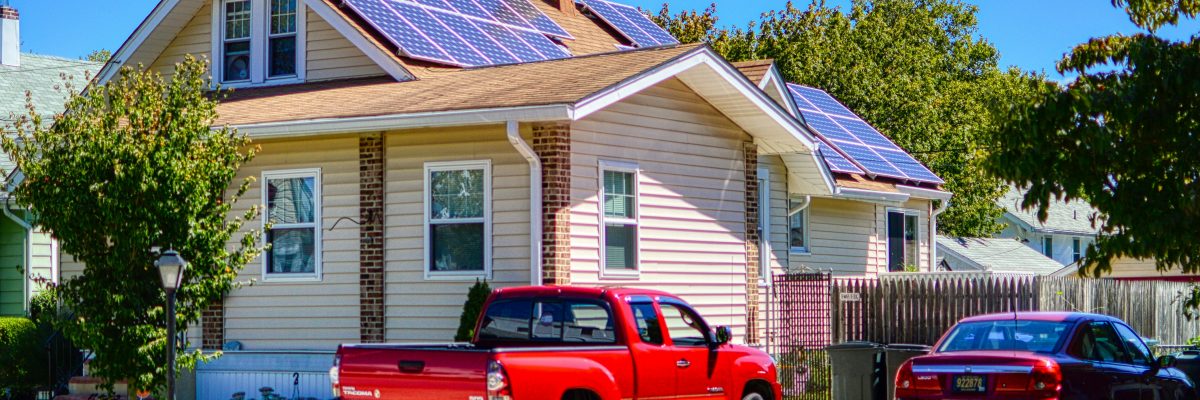
Residential solar and storage do more than support the grid. They provide tangible, everyday benefits to households—benefits that directly align with national priorities around affordability and resilience.
They can:
- Lower monthly electricity costs
- Increase energy independence
- Provide backup power during outages
- Protect households from future rate increases
As energy affordability becomes a growing concern across Canada, these technologies offer a way to put more control directly in the hands of households—helping them manage costs and stay powered during extreme weather events.
The real barrier: access, not technology
Solar technology is no longer new or unproven. Costs have declined significantly, and performance has improved. The challenge is access.
High upfront costs remain a major barrier for many households. Navigating installation, incentives, financing, and contractor selection can also be complex and time‑consuming.
Without targeted support, adoption will remain limited to those who can afford the initial investment and navigate the system. That leaves too many Canadians without tools that could improve their energy security and reduce their bills.
This is where federal leadership can make a decisive difference.
A proven model to build on
TAF’s Home Solar Accelerator program offers a practical example of how to overcome these barriers.
By providing concierge-style support, the Accelerator helps homeowners understand their options, connect with trusted installers, and navigate available incentives. This reduces soft costs such as time, uncertainty, and administrative burden—factors that often discourage adoption.
TAF’s experience shows that when households are supported through the process, uptake increases. The program has been supported by local utilities, municipalities, and in some cases by provincial incentives.
These insights can inform a national approach—one that combines financial support with trusted guidance to make solar and storage accessible at scale.
A high-impact federal investment
Targeted federal investment could rapidly accelerate adoption.
An investment of $830 million over four years could:
- Support installations in 100,000 homes
- Unlock nearly $2 billion in private capital
- Add more than 900 MW of distributed solar and storage capacity
This would expand Canada’s clean electricity supply in a way that is distributed, resilient, and directly beneficial to households—strengthening both local and national energy security.
A practical path forward
Canada needs solutions that are fast, affordable, and scalable. Residential solar and battery storage meet all three criteria.
By including targeted funding for these technologies in Budget 2026, and supporting delivery models that simplify participation, the federal government can help Canadians save money, strengthen energy security, and accelerate the transition to a low‑carbon economy.
The opportunity is clear. The tools are available. The next step is to scale what works.
See TAF’s complete federal budget recommendations for 2026.

Leave a Reply