

Solar success stories highlight the need for fact‑based decisions in Ontario’s electricity future
Ontario’s electricity system is in flux. The Independent Electricity System Operator (IESO) is working to procure new generation to meet rising demand, while emissions from the grid are climbing due to gas-fired generation expansion. The choices made today will determine whether Ontario can achieve a clean grid again—or lock communities into decades of higher pollution and stranded assets.
Municipal gatekeepers of new generation
Under current rules, new electricity projects must receive a municipal support resolution before they can move forward. This makes sense as communities hosting projects should have a say in what gets built. Local governments are closest to residents, and their input is vital for ensuring projects respect ecosystems, land use, and community health.
But municipalities are being asked to make decisions with limited time, capacity, and technical support. In some cases, councils have only weeks to evaluate complex proposals. Instead of independent analysis, they often receive glossy presentations or “greenwashing” statements from developers. One gas company even misrepresented a TAF research report to justify their proposal, even though the report actually raised alarm bells about rising electricity emissions and recommended against new gas plants. A recent BESS project proposal in Napanee was rejected because of a public misinformed about the risks. This imbalance of information risks skewing decisions away from the public good.
Rooftop solar success shows what’s possible
Not all municipalities are closing the door on clean energy. Encouragingly, five cities and towns (Mississauga, Whitby, Pickering, Richmond Hill, Caledon) have passed resolutions supporting new solar projects. Toronto has gone further, adopting a blanket resolution to support all project clean energy proposals. These decisions show that local leaders are seeing the value of solar for their communities and aligning energy decisions with their climate commitments.
Most of these projects are rooftop installations around one megawatt in size. While they cannot match the economies of scale of large ground-mounted solar farms, they provide unique value to the grid. Electricity generated in urbanized areas avoids transmission losses—up to 10% of power is lost moving electricity over long distances. Rooftop projects also minimize land-use conflicts and tend to be less controversial with residents. (Ground-mounted solar on prime agriculture land is currently banned by the province).
The rise of gas and the risks ahead
Backsliding is happening at the same time. More than 20 recent municipal support resolutions for new natural gas projects have already been passed under the IESO’s LT2 procurement. Gas plants have been greenlit in places like Leamington and St. Clair Township. While these projects may appear to solve immediate reliability concerns, they saddle communities with assets that will become increasingly uneconomic as regulation comes into play and clean energy costs continue to fall. They also add local air pollution, undermining public health.
Meanwhile, renewable projects face steep resistance. According to Wind Concerns Ontario, of 20 recent wind proposals, only three received municipal approval, two of which were withdrawn due to community opposition. At least 159 councils have gone further, passing blanket resolutions to reject all wind projects outright. While local concerns about siting and environmental impacts deserve consideration, blanket rejections ignore the evidence: wind and solar are the lowest-cost sources of electricity available. Rejecting wind completely risks leaving Ontario on the hook to pay for polluting, outdated gas plants.
The bigger picture: Aligning local and provincial goals
Ontario’s electricity system needs cost-effective, non-emitting generation to meet demand growth without increasing emissions. Yet the current municipal resolution process is producing outcomes that tilt toward gas and away from renewables. This misalignment threatens reliability, cost, and climate objectives.
The solution is not to remove municipal input, but to strengthen it. Municipalities need better tools, resources, and supports to evaluate projects. Independent technical assessments, standardized information packages, and longer timelines would help councils make decisions based on facts rather than marketing. Provincial agencies and utilities can play a role by providing clear, accessible data on the costs, benefits, and risks of different generation options.
Municipalities can get help here
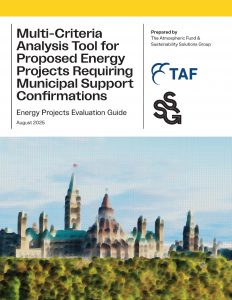
In partnership with the Association of Municipalities of Ontario and SSG Climate Solutions, TAF developed a multi-criteria analysis tool to support municipalities in proposal evaluation. TAF also has a policy team and grants program here to support municipalities with clean electrification. Get in touch more information.

Leave a Reply